
Is Parent-Child Interaction Therapy (PCIT) an Effective Treatment?
As is the case with any treatment, most people’s first question is, “Is it effective?”. In the case of PCIT, the short answer is, yes. PCIT has been confirmed as an effective treatment across numerous studies, and the California Evidence-Based Clearinghouse for Child Welfare recognized PCIT as a top-tier therapy in 2017, thanks to over 40 years of research proving how well it works. Research findings indicate that PCIT is particularly effective at reducing disruptive behavior in kids, improving the parent-child bond, boosting parenting skills, and lowering stress for parents. Some studies even suggest that PCIT works better than other parent training programs when it comes to managing children’s behavior.
What Makes PCIT so Effective?
If you’re wondering why PCIT stands out among parenting programs, you’re not alone. PCIT isn’t just another set of parenting tips—it’s a research-backed approach that brings real, lasting changes for families. What sets PCIT apart is how it strengthens the parent-child relationship, empowers parents with practical skills, and adapts to the unique needs of each family.
Builds secure, supportive parent-child relationships. PCIT helps strengthen the emotional bond between parents and their children by fostering positive interactions and communication. It is grounded in attachment theory, which focuses on building warm, supportive relationships as a basis for the development of social skills and emotion regulation.
Empowers parents. PCIT gives parents the tools to manage their child’s behaviors, which builds confidence and reduces feelings of helplessness. During treatment, therapists teach parents PRIDE skills—Praise, Reflect, Imitate, Describe, Enjoy—which encourages them to praise children for positive behavior, actively listen and communicate, model desired behavior, and clearly show interest and enjoyment in child-led activities. Parents also learn to give clear and direct commands, implement consistent discipline practices, and de-escalate challenging behavior.
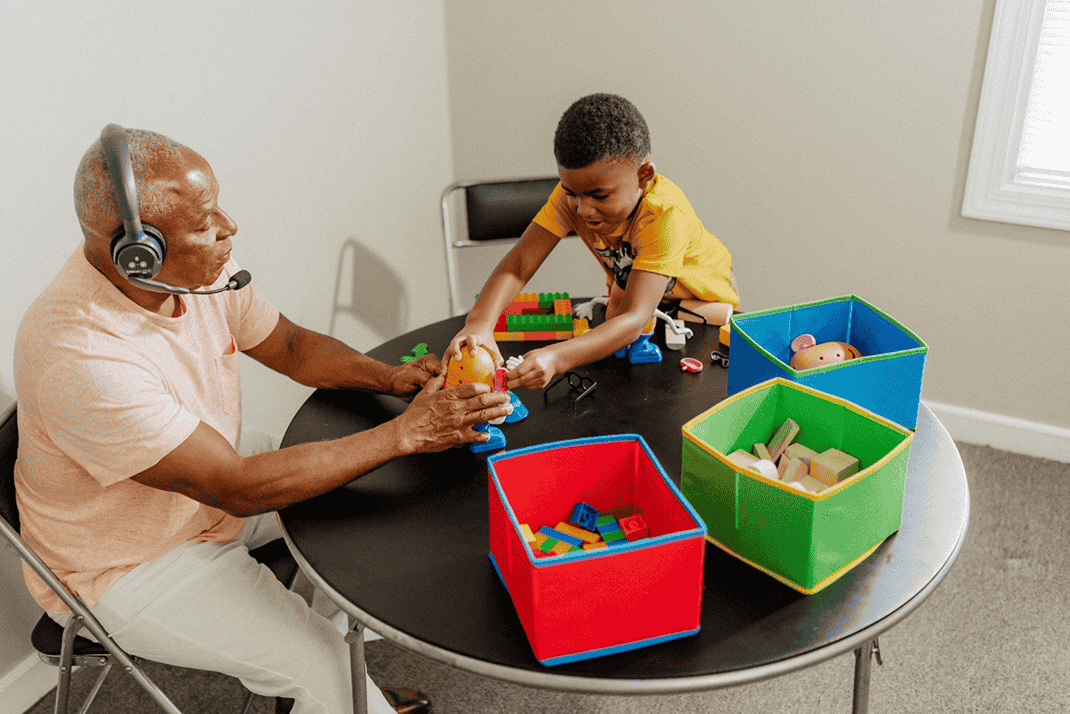
Then, to practice and master these skills, parents receive live coaching and real-time feedback from the therapist while interacting with their child. This allows the therapist to reinforce or correct parent technique, and helps parents solidify their understanding and hone their skills. Treatment is considered complete when parents demonstrate mastery of skills, and the child’s behavior is within typical range for children their age.
Focuses on both the child and the parent. PCIT treatment is divided into two phases: (1) the Child-Directed Interaction phase, and (2) the Parent-Directed Interaction phase. As such, it gives attention to both the child’s and the parent’s behavior, and assists them both in improving their emotion regulation. Significantly, the therapy asks parents to consider how their interactions with their child play a part in the child’s behavior. Recent research indicates that a key “mechanism of change,” or a key component to the effectiveness of PCIT, is parents’ improvements in emotion regulation and more positive parenting practices. PCIT helps parents engage with their child in a more positive and supportive manner, while also teaching the child new skills and behaviors.
Continues to evolve and adapt to the needs of children and families. PCIT has been adapted to address a range of emotional and behavioral disorders, and to support children with diverse needs. For example, modifications have been made to support children with Attention Deficit/Hyperactivity Disorder (ADHD) and anxiety disorders, as well as children diagnosed with depressive disorder.
What Can Make PCIT Ineffective?
PCIT is a highly effective treatment but requires significant parental involvement (12 to 20 weekly sessions and practice at home). Parents’ commitment to the process often determines the treatment’s efficacy. As one study among many explains, families who graduate from PCIT—i.e., complete both the Child-Directed Interaction and Parent-Directed Interaction phases—experience the greatest improvements. Families who terminate treatment early may experience some improvements, but to a lesser degree; and those who complete fewer than four sessions see little improvement.
That means sticking with PCIT can sometimes be tough for families—especially for parents who have hectic work schedules, limited flexibility, or trouble finding reliable childcare or transportation to get to sessions. PCIT may also be less effective for families with parents who are hearing impaired or have other disabilities or injuries that might prevent full engagement in the coaching sessions (e.g., trouble using an earpiece, inability to play or engage in physical exercises), or parents who have significant expressive or receptive language deficits.
How Do I Know if PCIT is a Good Fit for My Child?
PCIT is designed for children ages 2 to 7 who exhibit behavioral problems, such as temper tantrums, verbal or physical aggression, defiance (e.g., refusal to follow directions), or other disruptive behaviors. However, the therapy can also support children with special needs, including those with ADHD, anxiety disorders, and Autism Spectrum Disorder. Additionally, PCIT might also benefit families that want to strengthen their parent-child relationships, even if behavior issues aren’t severe.
What are the Steps to Getting Treatment?
PCIT is a powerful therapeutic tool that helps parents and children navigate behavioral challenges with empathy, structure, and consistency. It equips parents with practical, real-time strategies to handle difficult situations, improve behavior, and strengthen the family dynamic.
At Health In Mind, we can connect you with a dedicated PCIT certified therapist and help you begin your journey. If you’d like to learn more, please give us a call at 804.277.WELL (9355) or complete our form to get started.